Blog

  • The Hands of Humanity

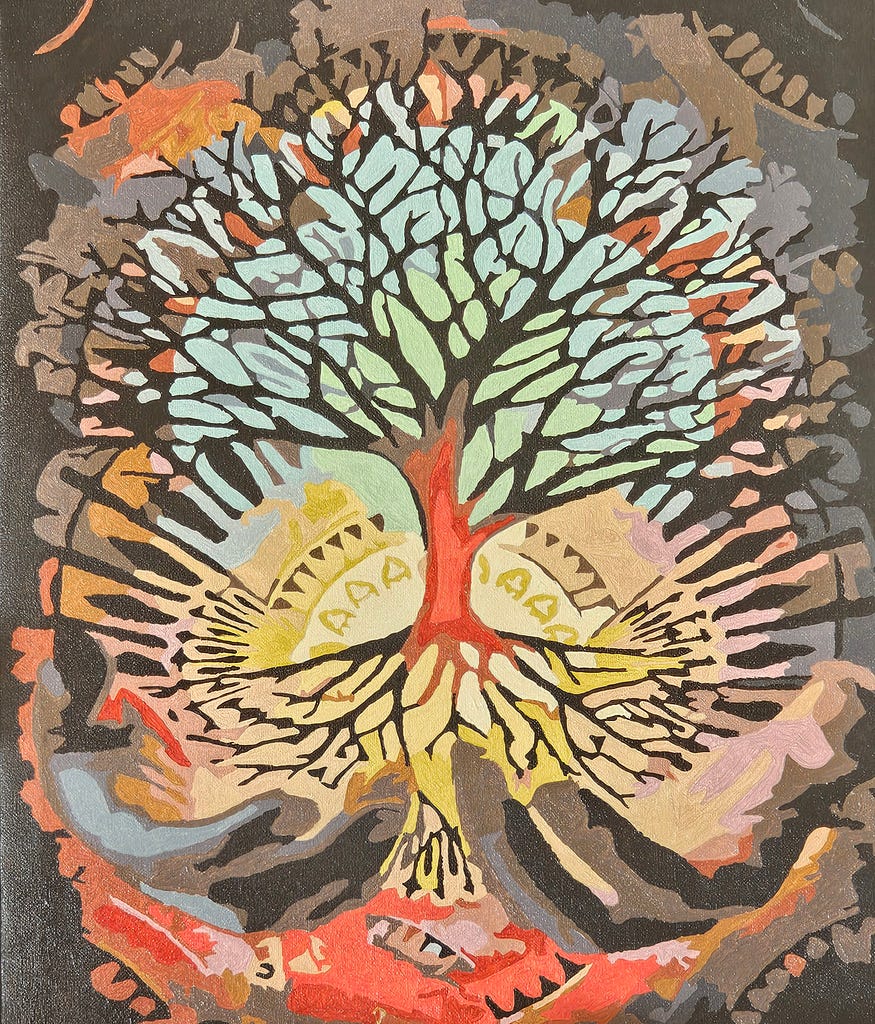
    This story must be told, not because it is ancient, though it is, and not because it is sacred, though it might be, but because it speaks to something that has always lived quietly inside the human heart.

    Long before the first cities rose, before the first names were spoken, before the first grief carved its hollow into the chest of the world, there was a tree that grew in the space between what is seen and what is felt. It did not grow in soil, though it had roots. It did not reach toward the sun, though it had branches. It was a tree spanning many worlds. It still exists in the place where the visible world thins enough for the invisible to show through.

    Some called it the First Tree. Others called it the Listening Tree. But the oldest name, the one whispered by those who still remembered the shape of the world before language, was the Tree Beneath the Skin of the World. The Norse called it Yggdrasil.

    Its trunk glowed with a deep, ember-red warmth, as though was lit from within by a memory of fire. Its branches spread outward in intricate patterns, splitting and re-joining, weaving themselves into shapes that resembled the branching of rivers, the pathways of lightning, the delicate threads of the human mind. Roots mirrored branches reaching downward with the same complexity, as though the tree was a bridge between two realms .

    And holding the tree were two human hands. They were not the hands of a single person. They were the hands of humanity itself, shaped by every gesture ever made in kindness, every touch offered in comfort, every moment when one being reached toward another with the simple desire to care. These hands were not perfect. They bore scars, calluses, lines etched by time and labour. But they were steady, and they were gentle, and they held the tree with the reverence of someone holding a new baby.

    This story begins on a day when the world felt heavier than usual, though nothing in particular had happened to make it so. A young woman walked alone through a valley she had never visited before. She had lived her life with a quiet diligence, doing what was expected, offering what was needed, carrying what was asked of her. But something inside her had begun to shift, like a tide turning beneath the surface of the sea.

    She followed a narrow path that wound through the valley, the air warm against her skin, touched with the faint scent of something sweet — not flowers, not fruit, but something that reminded her of childhood afternoons when the world felt larger than she could understand. The sky above her was neither dawn nor dusk, but something in between, as though time itself had paused to listen.

    The tree stood at the centre, glowing softly, its branches and roots weaving patterns that made her breath catch. The colours around it moved in slow spirals, as though the world were exhaling in her direction. And the hands, those immense, gentle hands held the tree with a tenderness that made her chest ache.

    She stepped closer, drawn by something she could not name.

    The ground beneath her feet felt warm, alive. The closer she came, the more she sensed something stirring inside her — not fear, not awe, but recognition. As though some part of her had been here before, long before she had a name or a history.

    When she reached the base of the tree, she placed her hand on the trunk. The bark was smooth, almost like skin, and beneath it she felt a faint vibration, steady and calm, like the heartbeat of a sleeping giant.

    A voice rose then, not from the tree, not from the air, but from somewhere inside her, a voice that was neither male nor female, neither young nor old.

    You have come far to remember what you already know. Sit,” the voice said.

    She lowered herself to the ground, leaning against the warm trunk. The moment her back touched the tree, a wave of memory washed through her, memories of sensations: the feeling of being held, the feeling of belonging, the feeling of being connected to something vast and benevolent. The tree pulsed gently.

    Every life grows tangled,” the voice continued. “Branches twist, roots collide, paths split and re-join. People forget that they are not separate from the world that shapes them. You carry questions,” the voice said. “Not the kind that seek answers, but the kind that seek direction.

    She felt her breath deepen. It was true. She had not come seeking solutions. She had come because something in her had begun to unravel, not in a destructive way but in a way that suggested she was outgrowing the shape of her life.

    The world within you is not smaller that the world around you,” the voice said. “It is simply less explored. Look.”

    She opened her eyes.

    The tree’s trunk had changed. Where her hand had rested, the bark had become translucent, revealing a network of glowing lines beneath the surface. The tree was not a tree. Or rather, it was more than a tree. It was a map of the world, of the self, of the unseen connections that bind everything together.

    Every life is a pattern,” the voice said. “Every choice a branch. Every loss a root. Every hope a leaf waiting to unfurl. You have forgotten how to listen to your own roots. Place your hand here,” the voice said.

    A section of the trunk glowed softly. She pressed her palm against it.

    She was no longer sitting at the base of the tree. She was standing inside it. The branches above her stretched into a sky that was not a sky, but a vast expanse of possibility. The roots below her reached into a ground that was not earth, but memory. Images rose around her, not as scenes but as impressions: moments of joy, moments of fear, moments of hesitation, moments of courage. They moved like currents, weaving themselves into patterns she had never noticed.

    “You are not lost,” the voice said. “You are simply between shapes. Growth is not a straight line. It is a spiral. You return to what you thought you had left behind, only to see it with new eyes. You came here because you are ready to grow in a new direction. But growth requires release. Let go of what no longer feeds you. And trust what is emerging. It is time to return.

    She blinked. She was once again sitting at the base of the tree, her hand resting on the warm bark. The valley was quiet, the colours around the tree calmer now, as though the world had exhaled.

    The voice spoke one last time.

    Carry the pattern with you. It will change as you change. That is its purpose.”
  • Three Boats

    A Decision Has To Be Made

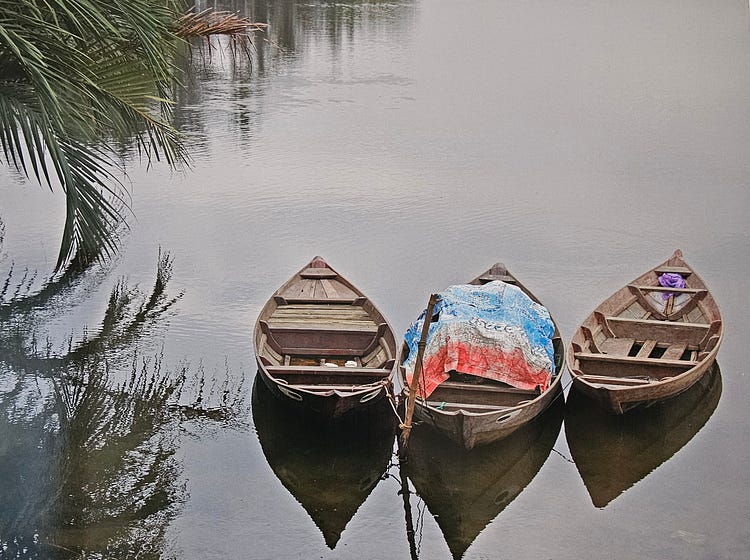
    Photo by author — China 2007

    It was small, barely a curve in the coastline, where the water held a stillness that did not belong to weather, I saw three small boats. The sun hesitated to show its face and though a rain threatened, the world stilled. Even the wind seemed to hesitate before crossing the inlet. The palms leaned inward, as if listening. And three boats tied loosely together, floated with the quiet assurance of things that had been waiting a long time.

    The bay was one of those places in the world which was porous, a place that stands between the world of humans and an alter reality. Standing at the edge of the bay, without knowing why I was there, I sensed the presence of a thin, invisible doorway. 

    I did not step through the portal which waited. I hesitated worried that I would look foolish stepping through space only to disappear or to find myself floundering in the silty water. I stood unable to commit to enter the unseen portal, or to turn my back and walk on. I felt the air shift around me, as though the world were adjusting itself to make room for my decision. Something on the other side of that invisible doorway had noticed me and was waiting to see what I would do.

    The three boats rocked gently, their hulls touching with the soft familiarity as if they were old companions. They were simple vessels, worn smooth by years of sun and salt. Yet each carried a different presence, a different weight. The one on the left was sturdy, its wood darkened by time. The middle boat was partially covered with a tarp of muted colours, as though guarding something fragile. The third spoke of sparseness.

    I stared at the them. I was certain that I had been here before in a dream which I couldn’t fully recall. The portal stood between me and the boats, hovering unseen above the water. As I stood, caught between worlds, a voice drifted toward me, as soft as the first stir of wind.

    “You came early.”

    I turned to see who had spoken. An old woman stood among the palms, her posture straight, her eyes bright with the kind of clarity that comes from having lived long enough to stop pretending. She wore no expression of surprise at finding me there. If anything, she looked faintly relieved.

    “I didn’t know I was expected,” I said.

    “People rarely do,” she replied. “But the bay knows. It calls those who have begun to outgrow their own lives.”

    She walked to the water’s edge and looked at the boats with the familiarity of someone greeting old friends.

    “These three,” she said, “are older than the village that once stood here. Older than the stories people tell about them. They belong to the threshold where the seen and unseen meet.”

    I stepped closer, drawn by something I could not name. “What are they waiting for?” I asked.

    She smiled, not unkindly. “Not what, but who. They wait someone who is ready to listen.”

    The wind shifted then, brushing the surface of the water. The boats rocked in unison, as if acknowledging the conversation.

    The woman gestured toward the first boat. “This one holds the weight of what has been carried too long,” she said. “The burdens people mistake for identity. The roles they never chose but learned to perform. The stories they inherited before they had a voice.”

    I felt a tightening in my chest, the familiar ache of a life lived according to expectations I had never questioned.

    She moved to the second boat, the one with the tarp. “This one holds the weight of what has been protected,” she continued. “The fragile things. The unspoken things. The memories wrapped so tightly that even their owner forgets what lies beneath.”

    The tarp fluttered slightly, though no wind touched it.

    “And the third?” I asked, my voice quieter now.

    “This one holds the weight of what has been lost,” she said. “Not just people, but possibilities. Choices not taken. Words not spoken. The versions of oneself that drifted away.”

    The boat stirred, as though remembering a touch.

    I looked at the three boats, feeling the subtle pull of each. They were not symbols. They were invitations.

    “Why are you show me this?” I asked.

    “Because you are standing at the doorway,” she said. “And you cannot cross it carrying everything you brought with you.”

    The inlet grew even quieter. The air thickened, not with humidity but with meaning.

    “What happens if I choose one?” I asked.

    “You do not choose,” she said. “You are chosen. The boat that calls to you will reveal what you are ready to face.”

    I closed my eyes. The world behind my eyelids was dark, but not empty. I felt the presence of the three boats like three distinct heartbeats.

    The first pulsed with heaviness, with the weight of obligations, of identities worn thin. The second pulsed with secrecy, of the things I had hidden even from myself. The third pulsed with longing, the ache of what I had lost or abandoned.

    When I opened my eyes, the old woman was watching me with a patience that felt ancient.

    “Go,” she said softly. “Let the water speak.”

    I stepped toward the boats. The sand shifted beneath my feet, warm and damp. The inlet’s surface reflected the sky in a way that made it impossible to tell where one ended and the other began.

    I reached the first boat. The air around it felt dense, as though filled with the breath of all the selves I had pretended to be. I touched the wood. It was solid, familiar, almost comforting in its heaviness. But the comfort felt like a trap, a room with no windows.

    I stepped back.

    I approached the second boat. The tarp rustled, whispering secrets I had long avoided. I felt the pull of it, the desire to uncover, to understand, to finally look at what I had hidden away, even from myself. But the pull was sharp, almost painful. I was not ready.

    I stepped back again.

    Then I approached the third boat.

    I saw a small cloth, its colour shifting subtly with the light. When I placed my hand on the edge of the boat, the wood felt warm, not from the sun, but from something alive beneath the surface.

    The boat rocked gently, as if greeting me.

    A quiet certainty rose in my chest. This was the one. Not because it was easy. Not because it was safe. But because it held the ache I had never allowed myself to feel fully, the ache that had shaped me more than any success or failure.

    I stepped into the boat. The inlet exhaled. The old woman nodded once, as though acknowledging a truth I had finally admitted to myself. The boat drifted, not outward but inward, toward the darker part of the inlet where the reflections deepened and the air grew stiller.

    I did not know what waited there. But for the first time in my life, the unknown did not feel like a threat. It felt like a beginning.

  • The First Tree

    A Mythic Tale

    The Tree — Image painted by author’s wife

    They say that before humans learned to speak, the world was already full of stories which moved through the land like wind through tall grass, unseen and unheard. Yet, the unspoken words were never lost. Some stories settled in stones. Some curled into the bellies of rivers. And one, the oldest story of them all, rooted itself in a tree that grew where the forest opened into a quiet bowl of the Earth.

    No one knew when the tree appeared. It was simply there, as though it had stepped into the world fully formed. Its trunk rose in a slow spiral, as if remembering the motion of water. Its leaves shimmered with two shades, one that caught the sun, one that held the night. Together they formed a pattern that was not drawn but grown, a living reminder that light and shadow were siblings, not rivals.

    The animals approached it with the same caution they used for thunderstorms and newborns. They sensed that the tree was aware of their presence. They stood before the tree as though hypnotized. As they stood there entranced, the tree began to tell a story from a distant past.

    In the time before time had a name, two beings emerged out of the mist that gathered at the tree’s roots. They were not humans. They were older than that. They were shaped from the breath of the world when it was still soft, still struggling to become solid.

    Their forms were human only in the way clouds sometimes resemble faces. They moved with the quiet certainty of those who have never been lost. One placed a hand on the bright side of my leaves. The other touched the dark underside of those leaves.

    “You have kept the balance,” said the first. “You have kept the memory,” said the second.

    I did not speak, but the ground beneath me warmed, as though acknowledging a long-awaited return.

    The two beings leaned into the branches. Their forms loosened, unspooled, and drifted into the swirling pattern of the leaves. They did not disappear. They joined. Dark circling light, light circling dark. I accepted them the way the earth accepts rain, without question, without hesitation.

    The tree went silent, pausing before finding more words, before gathering images that replaced language, predated language. From that moment, the clearing changed. Unspooling as though a film being projected, time unfolded.

    Travelers who passed through the orbit of the tree felt something shift inside them, though they could never name it. Some said they heard a heartbeat that was not their own. Others said they felt watched, but gently, like a parent making sure a child did not wander too far.

    A few claimed that if you stood beneath the tree at dawn, when the world was thin and the light was still deciding what shape to take, you could hear the first story. It was not a story of heroes or battles. It was a story of breath. Of balance. Of the long, patient work of becoming.

    The tree still stands in that clearing, though it is easy to walk past it if you are in a hurry. It does not call out. It does not demand reverence. It simply waits, as old things do, for someone who knows how to listen.

    And if you listen long enough, you may feel the two beings stirring in the leaves keeping watch.

  • Pre-Mexico Winter Sojourn

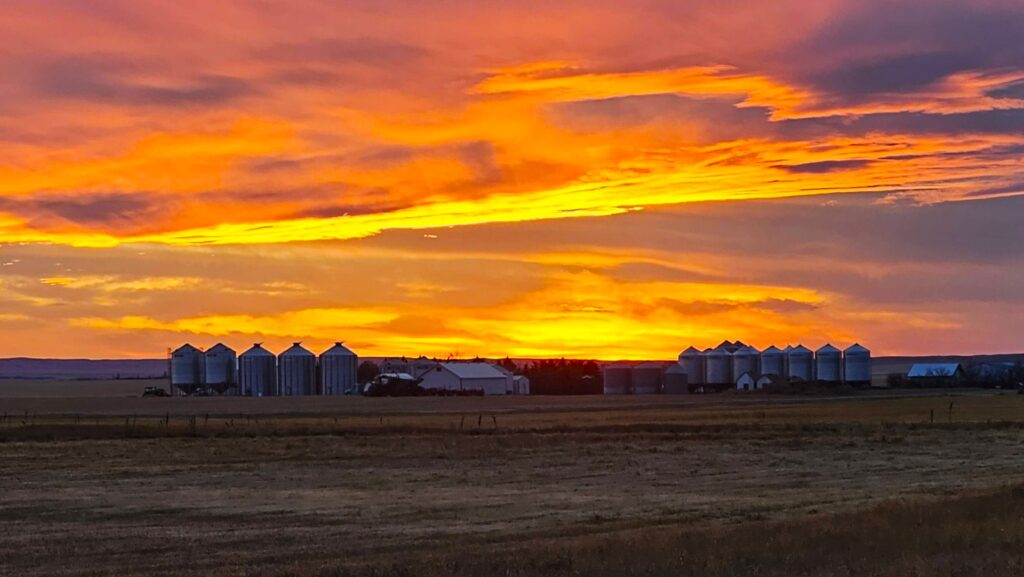
    Sunset in November 2025

    It has been a busy month since my last post. The biggest news is that I have submitted my latest novel-in-progress to Thistledown Press located in Saskatoon in hopes they will pick it up for publication via the traditional route. Like the Saskatchewan Awards submission, it will be months before I hear anything from them – if they respond. If not accepted, I will go back to self-publishing.

    The novel is written. I am going through it for the third time to weed out errors. Curiously, I am finding that in the process, the novel is slightly growing in size as I make improvements. If it is accepted, I know that it will need yet another round of editing to meet with Thistledown’s editorial expectations.

    On November 27th, we will be boarding a plane to take us to Mexico where we will spend four months staying warm. On the writing agenda is to finish Space Cadet Academy Book Three. As well, there will be a lot of work to rebuild this website since I trashed a number of parts which were in need of serious improvements.

  • This Site Is Evolving And Improving

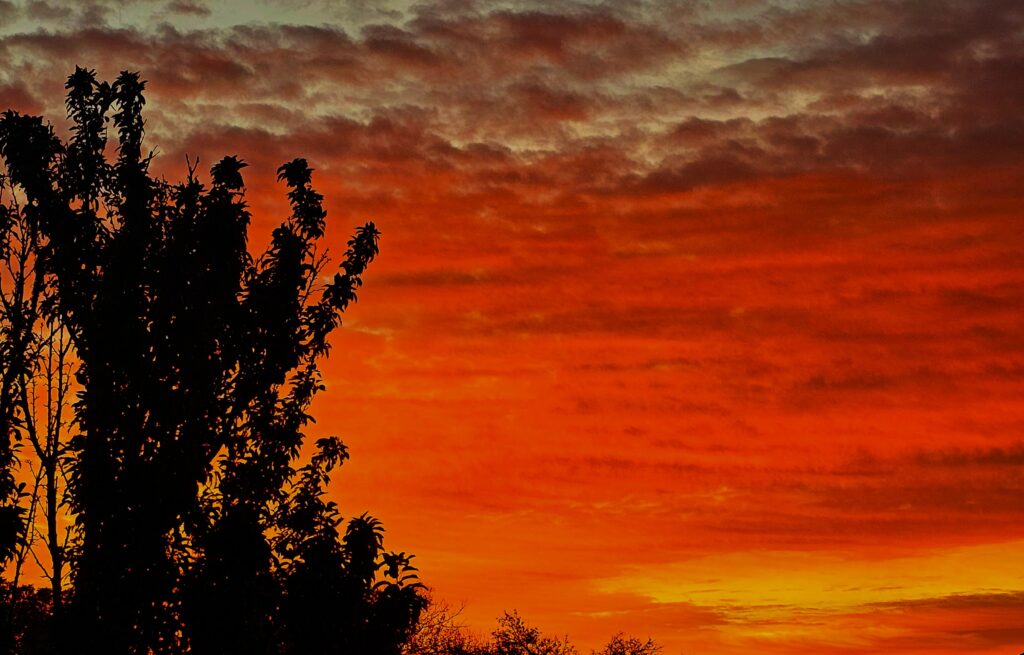
    The sky, a Saskatchewan sky as dawn breaks, is always breath-taking. Each day is filled with potential. My life as a writer is in constant change as I get older [not necessarily any wiser] likely due to the fact that my best-before date is approaching. I took this photo this morning while waiting for the coffee to be ready. No wonder why they call this place the “land of the living skies.”

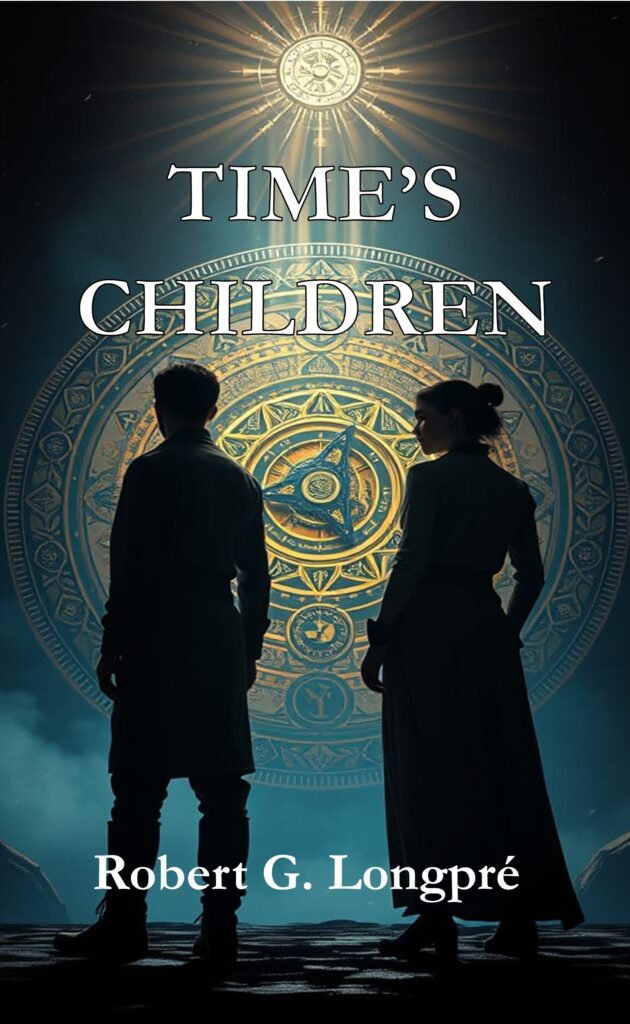
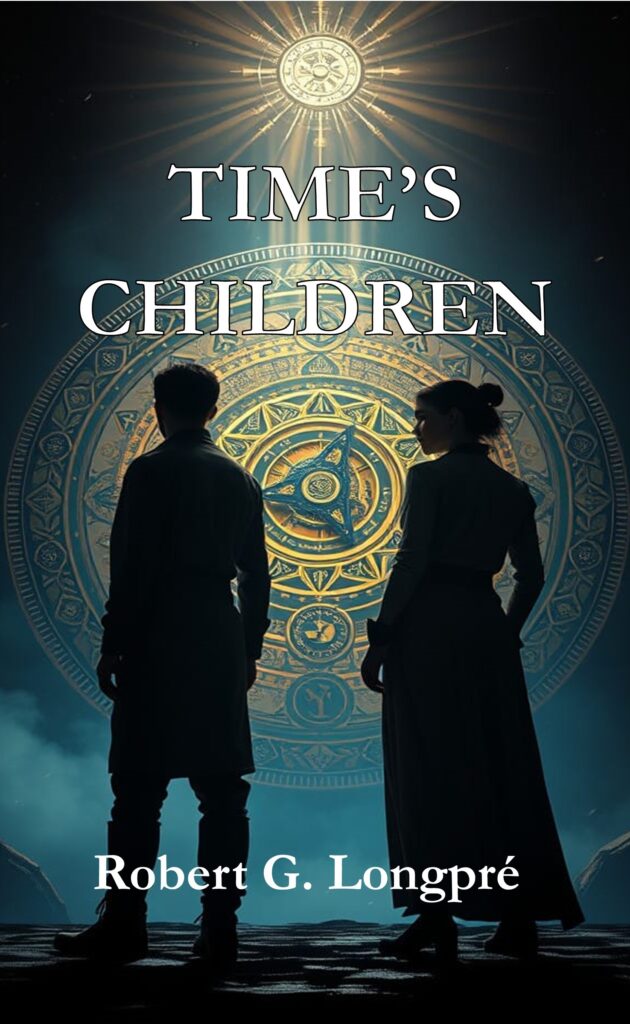
    My book, Time’s Children, has been submitted to Saskatchewan Book Awards in two categories. I will find out sometime next spring if I made the shortlist and how well the book fared in the competition. It’s the first time I have risked such a venture. There’s no question, I am most comfortable with writing and editing than in promoting my written work.

    Talking about my books, including Time’s Children, I am slowly adding the titles to this new version of my author website. I have begun by cleaning up the menu which can be seen above. Keeping it simple is decidedly much better than trying to say everything at once which overloads the menu, likely discouraging visitors from checking out the options.

    So far, I am pleased with the changes though I would have preferred to have this blog section not on the frontpage. Regardless, it doesn’t really matter as long as you come and read and hopefully find a book you are interested in reading. Now, it’s time to get back to work on making this an even friendlier and better site.

    Robert

  • I Have My Own Web Server

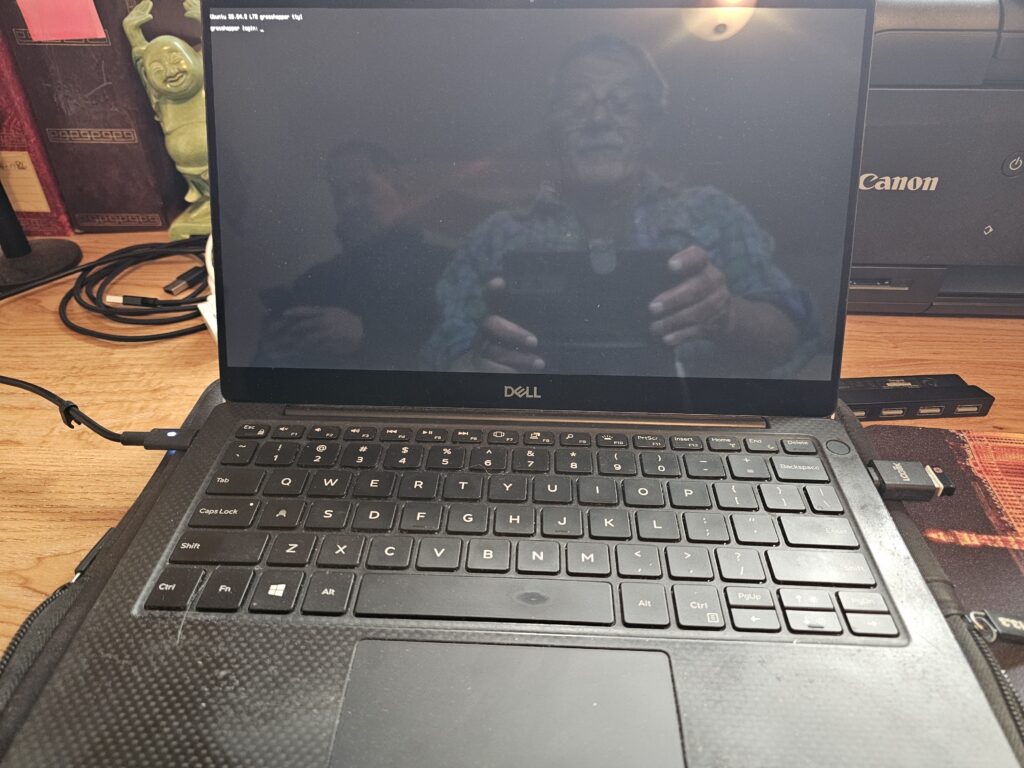
    Well, since it is almost time to renew my subscription for webhosting service, I decided it was the perfect time to avoid paying $112/year and use my old laptop as a server – a temporary server for the present time. There was no way I could do this on my own, so I had my son-in-law, Lawrence, do the heavy lifting with me serving as a cheering squad on the sidelines.

    It is a big learning curve, but the deed is now done. What you see is my relocated website to my Dell server using Ubuntu 22.04 and CyberPanel and WordPress-dot-org. I don’t have all the images from the past, but that is sure to change in the near future.

    On the writing front, I am now in the running for two Saskatchewan Book Awards for the last published novel, Time’s Children. Wish me luck. As well, I have just finished the first draft of a very different novel.

    The new novel is tentatively titled: Ink Spilled From an Eagle’s Cry. It is literary fiction with a bit of a Jungian and an Indigenous framework. I guess it could be thought of as a Jungian Romance.

    The Indigenous aspect is based on the Seven Grandfathers’ Teachings of Anishinaabe [Ojibwe] culture. This is going to be the first novel I will attempt to publish using the traditional publishing process. If accepted, it will likely be a few years to actually become available for reading. Wish me luck

  • A Year in Review – 2018

    Over the past several days, I have been going over my records since publishing my first eBook in 2014. I first published at Smashwords and then made a switch to CreateSpace and Amazon a year later at which time I began to sell paperback books as well. I had sold print books at Blurb beginning in 2009 until 2015. As of this past year, CreateSpace has been absorbed into Amazon and as such doesn’t really exist anymore for me as a publisher and author. So, I am rethinking my approaches to publishing for the future.

    All of this activity on my part has revealed just how many books have left my hands and made into the hands of readers, some as gifts and the rest being sold. Below are the results as far as my records are concerned. Any errors would only mean that I have sold more books, not less.

    • Title …………………………………………………………. Print copies … eBook copies … Total copies
    • Through a Jungian Lens: Swamplands 10 292 302
    • Through a Jungian Lens: Tunnel Vision 20 0 20
    • Through a Jungian Lens: Hero’s Journey 1 395 396
    • Broken Boy 361 310 671
    • On the Broken Road 272 566 838
    • A Small Company of Pilgrims 248 416 664
    • It’s Complicated 92 17 109
    • Naked Poetry: Book 1 29 370 399
    • Naked Poetry: Book 2 24 19 43
    • Naked Poetry: Book 3 16 10 26

    Final results – 3476 books have found homes. These numbers don’t indicate real reader interest or dis-interest, as all of the Through a Jungian Lens books, and the Naked Poetry books have been taken our of circulation for several years. Only four books are now available for sale through Amazon. Bringing back the old titles is part of my projects for the upcoming year.

    In addition to addressing the needs to put things in order for these older books, I have two books approaching publication. The third and final book in my autobiography series will be published in April. The first novel which will be published with a pseudonym, René Beauchemin. A third book which will be the first in a historical series is in progress. There is more going on, but I will save the rest for future posts.

    In 2019, I intend on again doing a few book-signing tours. In addition to this venue for book sales, I want to invest more energy, and money in promoting the eBook ventures which have been neglected forcing them to live a life on their own.

    Now, with all that said, I wish everyone who finds their way to this page, a Happy New Year.